
Cardio Product Family Redesign
TRUE Fitness and Octane reached a pivotal moment as a complex, fragmented cardio portfolio made it difficult to communicate a clear product strategy. The lineup spanned dozens of SKUs, multiple console generations, and inconsistent user experiences across equipment types.
As the category shifted toward more connected, data-driven experiences, TRUE initiated the largest product overhaul in company history: a full commercial cardio refresh spanning 23 mechanical bases and 3 electrical platforms. The goal was to reorganize the product offerings into 4 tiered families: Apex, Gravity, Launch, and Vapor, creating a cohesive product system that balanced performance, usability, and long-term scalability.
Role
Lead Industrial Designer
Objective
Led industrial design across a large-scale commercial cardio portfolio refresh, contributing to the development of a cohesive product system spanning multiple product lines.
Focused on defining scalable design language and aligning physical product design with evolving user experience and platform needs.
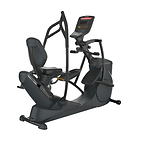
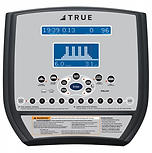
A fragmented cardio portfolio spanning 40+ SKUs across multiple brands, with inconsistent hardware, interfaces, and user experiences across equipment types



Design Direction
Establishing a Visual Language: The Treadmill as a Flagship
The redesign of the Apex, Gravity, and Launch treadmills established the foundation for a unified visual language across the TRUE Fitness and Octane portfolio. As the most common and visible equipment in commercial gyms, treadmills became the benchmark for how the brand should look, feel, and perform.
Design Principles
-
Confident, Performance-Driven Forms
Strong, intentional geometries that communicate stability and durability without excess visual complexity -
Refined Proportions and Stance
Lower, grounded profiles with optimized viewing angles to improve ergonomics and visual presence -
Consistent Brand Signifiers
Cohesive use of lighting, material transitions, and graphics to unify the portfolio while maintaining clear product tier differentiation -
Disciplined CMF Strategy
A focused palette of finishes and textures that balances premium perception with durability in high-use environments
These principles established a scalable design system that extended beyond treadmills, informing ellipticals, bikes, and future product categories.


Exploring form language and cockpit architecture to define structure, integration, and overall product direction
Exploring form, structure, and console integration to define differentiation across product tiers


Final Treadmill Design
Three treadmills designed to define and differentiate the primary product tiers


LAUNCH TREADMILL
The Launch Series was designed with constraint as a starting point, focusing on space, cost, and essential functionality. The approach focused on reducing the product to its core elements: a compact footprint, clear structure, and durable construction. Every decision prioritizes efficiency, resulting in a straightforward, no-friction experience that supports high-frequency use without unnecessary complexity.


APEX TREADMILL
The Apex Series was designed around a clear set of priorities—proportion, durability, and restraint. Rather than adding complexity, the focus was on refining what matters: simplifying the overall form, tightening surface transitions, and using materials in a way that feels honest and intentional. It expresses strength through clarity, not excess.
GRAVITY TREADMILL
The Gravity Series was shaped by the need to perform across a wide range of users and environments. The design focuses on resolving ergonomics, simplifying key interactions, and creating a form that feels approachable without sacrificing durability. It’s designed to be used comfortably and to hold up under constant, varied use.
Designing Within Constraints
Much of the portfolio required working within existing platforms, acquired product lines, and strict cost constraints.
The challenge shifted from full redesign to strategically unifying disparate products into a cohesive system.
-
Leveraged CMF as a System-Level Tool
Used color, material, and finish to align legacy and acquired products with the new design language -
Created Cohesion Across Disparate Platforms
Established shared visual anchors and hierarchy to reduce fragmentation across mixed-origin products -
Maximized Impact Within Constraints
Prioritized high-impact, low-cost changes and reused components where possible -
Aligned Design with Engineering and Cost Requirements
Worked closely with engineering and manufacturing to ensure solutions were feasible and scalable
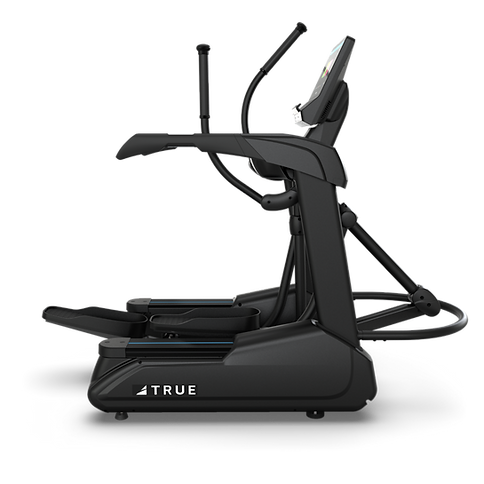
Updated CMF aligning legacy products with new design language


Identified common visual anchors that could be applied across all products and reduced visual fragmentation across product generations
Design System & Scalability

The treadmill redesign established a clear design direction that scaled across the full portfolio.
A shared set of principles enabled consistency across product types, platforms, and price tiers, creating a cohesive system that can evolve over time.
-
Clear Structure Forms are simple and purposeful, with structure that reads clearly at a glance.


-
Controlled Surfaces Clean transitions and intentional breaks reduce visual noise and create consistency.
-
Consistent Proportions Key elements relate to each other in a predictable way across all products.


-
Disciplined CMF Materials and finishes define hierarchy and unify the portfolio.
Built to Scale
The system was designed to work across different conditions:
-
New products use it as a foundation
-
Existing products align through targeted updates (primarily CMF and interfaces)
-
Acquired products are gradually brought into the system over time


